
Retinal Tears & Detachment
Have you suddenly noticed flashes of light, black spots or floaters, or a shadow creeping across your line of vision? These can be symptoms of retinal tears and detachment, serious conditions that require prompt diagnosis and treatment to preserve your vision.
The good news? When caught early, retinal tears and detachments are highly treatable. That’s why at Retina Consultants of Southern Colorado, our experienced retina specialists are equipped to diagnose and manage these conditions quickly and effectively. Knowing what’s going on in your eyes and when to get help can be the key to saving your sight. Read on to learn what to watch for and how we can help.
Understanding Retinal Tears and How They Lead to Detachment
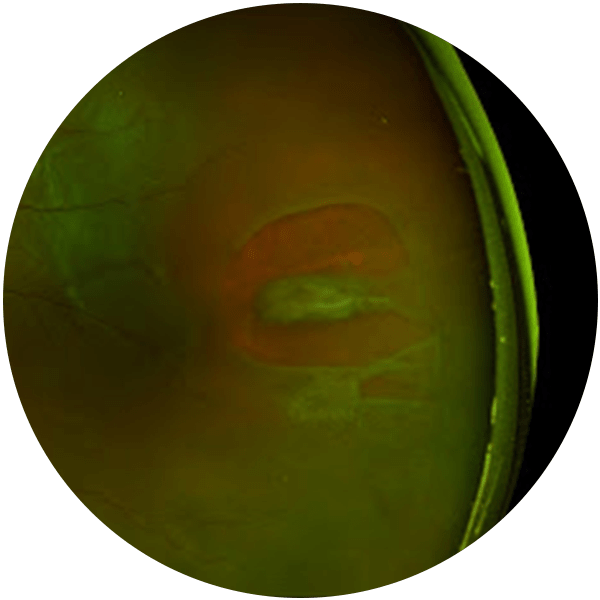
Here's where things can get serious: when a tear forms, fluid from inside your eye can seep through that opening and get underneath the retina. As more fluid accumulates, it pushes the retina away from the back wall of your eye, like wallpaper peeling off a wall. This is called a retinal detachment, and it's a medical emergency.
The critical thing to understand is that a retinal tear doesn't always lead to detachment, but it creates the opportunity for one to happen. That's why treating tears quickly is so important, to prevent a more serious problem before it develops.
Warning Signs: Retinal Tear and Detachment Symptoms
Your eyes often give you clear warning signals when something's wrong with your retina. Pay attention to these symptoms, especially if they appear suddenly:
- Flashes of Light: These aren't your typical "saw stars after bumping your head" flashes. We're talking about brief streaks or arcs of light that appear in your peripheral vision, often more noticeable in dim lighting. They occur because the vitreous gel is tugging on your retina, and your brain interprets that mechanical stimulation as light.
- New or Increased Floaters: Almost everyone has a few floaters, or those little specks, cobwebs, or squiggly lines that drift across your vision. But if you suddenly notice new floaters, or if existing ones increase, this could be a red flag that a retinal tear has occurred.
- A Curtain or Shadow in Your Vision: This is often the sign that a tear has progressed to a detachment. You might notice a dark curtain, veil, or shadow moving across your field of vision, usually starting from the periphery and potentially moving toward the center. This represents the area where your retina has detached and is no longer functioning properly.
When it comes to retinal tears and detachments, it is imperative to act fast. If you’re experiencing any of these symptoms, give your eye doctor a call.
What Causes Retinal Tears? Who's at Risk?
Most retinal tears occur spontaneously as we age, while certain factors make some people more vulnerable to them than others. Risk factors can include:
- Aging and Natural Changes: The most common cause is simply getting older. As we age (typically after 50), the vitreous gel that fills our eye naturally liquefies and shrinks, a process called posterior vitreous detachment or PVD. As it pulls away from the retina, it can create enough traction to cause a tear.
- Eye Trauma: A blow to the eye or head, whether from sports, an accident, or other injury, can cause immediate tearing of the retina. This is one reason why protective eyewear is so important during activities with injury risk.
- Severe Nearsightedness (High Myopia): If you're very nearsighted, your eyeball is typically longer than average, which means your retina is stretched thinner. This makes it more fragile and susceptible to tears. People with high myopia need to be especially vigilant about regular eye exams.
- Family History: If close family members have experienced retinal tears or detachments, your risk increases. While we can't change our genetics, knowing your family history helps your eye doctor monitor you more closely.
- Previous Eye Surgery or Conditions: Certain eye surgeries (particularly cataract surgery) and other retinal conditions can increase your risk of developing tears or detachments down the road.
How Retinal Tears Are Diagnosed
A retinal tear is diagnosed with a thorough examination by a retina specialist. During an exam, your doctor will dilate your pupils with special drops, which takes about 20-30 minutes. Once dilated, they can see all the way to the back of your eye and begin scleral depression (i.e., applying pressure to the white part of the eye) to fully see the peripheral retina. They're looking for any tears, holes, or areas where the retina is pulling away.
In some cases, additional imaging may be helpful:
- Optical Coherence Tomography (OCT) creates detailed cross-sectional images of your retina.
- Ultrasounds may be used if something is blocking the view of your retina, like bleeding in the eye.
The examination is painless, though you'll be sensitive to light afterward and your vision will be blurry for several hours due to the dilating drops.
Treating Retinal Tears
Prognosis is good if a retinal tear is caught early before significant detachment occurs. Medical treatment options to prevent further damage include:
- Laser Photocoagulation: This is the most common treatment for retinal tears. Your doctor uses a laser to create small burns around the edges of the tear. These burns eventually form scar tissue that "welds" the retina to the underlying tissue, creating a barrier that prevents fluid from seeping through. The procedure is typically done in the office, takes just minutes, and requires only numbing eye drops. You might see bright flashes during the procedure, but it's generally not painful.
- Cryotherapy (Freezing Treatment): Instead of heat, cryotherapy uses extreme cold to create the same sealing effect around a tear. After undergoing general anesthesia, a freezing probe is applied to the outside of your eye in the area of the tear. Like laser treatment, this creates a scar that bonds the retina in place. Cryotherapy might be chosen over laser in certain situations, such as when a tear is located in a hard-to-reach area or when there's bleeding that obscures the laser's view.
Both treatments have excellent success rates when performed promptly. After treatment, you'll need follow-up visits to ensure the seal is holding and no new tears have developed.
Treating Retinal Detachment
If a retinal detachment has already occurred, the situation is more urgent and requires surgery. There are several surgical approaches, and your retina specialist will choose the one best suited to your specific situation.
- Pneumatic Retinopexy: With this minimally invasive option, your doctor injects a gas bubble into your eye to push the retina back into place. Then, they use laser or cryotherapy to seal the tear. While you recover, you'll need to maintain specific head positioning for several days so the bubble stays in the right spot, typically dissolving over 1-2 weeks.
- Scleral Buckle: Think of this as creating a "belt" around your eye to relieve the pulling force on your retina. A silicone band is placed around the outside of your eyeball, gently indenting the eye wall and bringing it closer to the detached retina. This relieves traction and allows the retina to reattach. The buckle stays in place permanently, though you won't be able to see or feel it. This procedure is often combined with cryotherapy or laser to seal the tear.
- Vitrectomy: This is the most complex approach but also the most versatile. Your surgeon makes three tiny incisions in your eye and uses delicate instruments to remove the vitreous gel that's pulling on your retina. They then flatten the retina back into position and may use a gas bubble, oil, or other material to hold it in place while it heals. Laser or cryotherapy seals any tears. Recovery varies, but if a gas bubble is used, you'll need to maintain specific head positioning and avoid air travel until it dissolves.
Some complex detachments require a combination of these techniques. Your surgeon will explain the best approach for your particular situation.
The Urgency of Treatment and What to Expect
When it comes to retinal tears and detachments, time is of the essence. The longer a detachment goes untreated, the greater the risk of permanent vision loss.
- For retinal tears without detachment: Treatment is urgent but not necessarily an emergency. That said, you shouldn't delay because tears can progress to detachment within days or even hours in some cases.
- For retinal detachments: This is a true emergency. The goal is to reattach the retina as quickly as possible, ideally within days. When the macula (the central part of your retina responsible for detailed vision) is still attached, surgery can often preserve excellent vision. Once the macula detaches, even successful surgery may not restore vision to previous levels.
The success rates for retinal detachment surgery are quite good, and around 85-90% of detachments can be reattached with a single operation. Some cases require additional procedures. However, success in reattaching the retina doesn't always mean perfect vision recovery. Factors affecting your final vision include:
- How much of the retina has detached
- Whether the macula was involved
- How long the retina was detached before surgery
- Your individual healing process
Many patients regain useful, functional vision even if it's not quite as sharp as before. Some experience significant recovery, while others notice persistent changes in their vision quality or visual field.
The takeaway? Early detection and prompt treatment give you the best possible chance of preserving your sight.
Advanced Care for Retinal Tears and Detachment in Southern Colorado
Retinal tears and detachments are serious, but they're also highly treatable when caught early. If you experience sudden flashes, a shower of new floaters, or any shadows or curtains in your vision, don't hesitate — contact Retina Consultants of Southern Colorado immediately.
Our fellowship-trained retina specialists are experienced in handling these urgent situations and are committed to providing you with prompt, expert care when every moment counts. We have the advanced technology and surgical expertise to diagnose and treat retinal tears and detachments effectively, giving you the best opportunity to preserve your precious vision. Let us help you protect your vision.