
Flashes & Floaters: What You Need to Know
Have you noticed floating specks or sudden flashes of light in your vision? You're not alone. These symptoms are common, especially as we age, and are often harmless. But in some cases, they can be an early warning sign of a more serious eye condition.
At Retina Consultants of Southern Colorado, our specialists can identify and treat the underlying causes of flashes and floaters, particularly when they signal retinal complications. Read on to learn what these symptoms could mean and when it's time to see a retina specialist.
What are Flashes and Floaters?
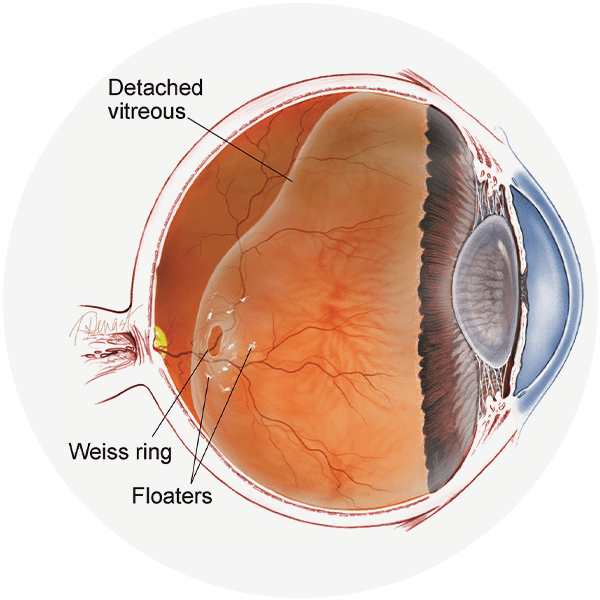
Floaters are mobile specks, strands, or cobweb-like shadows that drift across your field of vision, obscuring it. They move as your eyes move and are most noticeable against bright, uniform backgrounds, like a clear sky or a white wall. Flashes, on the other hand, appear as sudden bursts or streaks of light, often at the edges of your vision.
Both flashes and floaters are common symptoms of Posterior Vitreous Detachment (PVD), a natural, age-related change where the vitreous gel inside the eye shrinks and separates from the retina. While these symptoms typically fade over a few weeks and are not usually sight-threatening, they can indicate more serious retinal issues if accompanied by other complications.
For most people, floaters and flashes are a normal part of aging, especially after age 60. As we age, the vitreous gel inside the eye gradually becomes more liquid and begins to condense. The gel then separates from the retina until only the base of the vitreous remains attached.
This gradual and uniform separation of the vitreous gel from the retina due to Posterior Vitreous Detachment (PVD) is typically benign. In about 85% of cases, symptoms like flashes and floaters decrease significantly within three months, and no treatment is needed. If you have mild floaters that have been present for years without change, flashes that fade over a few weeks without affecting vision, and symptoms not accompanied by vision loss or new blind spots, there is generally no cause for concern.
How are flashes and floaters diagnosed?
PVD and related conditions are diagnosed through a comprehensive, dilated eye exam. This allows your eye care specialist to thoroughly examine the retina and vitreous gel for any signs of separation, tears, or other abnormalities.
In cases where the vitreous gel is very clear or the view of the retina is obscured, additional imaging may be needed to confirm the diagnosis. Common tests include:
- Optical Coherence Tomography (OCT): A non-invasive imaging scan that provides high-resolution, cross-sectional images of the retina.
- Ultrasound imaging: Used when the view inside the eye is blocked, such as by bleeding (vitreous hemorrhage), to visualize the vitreous and retina.
Early diagnosis is key to preventing complications and protecting your long-term vision.
When to Seek Urgent Care for Flashes and Floaters
While PVD is generally non-threatening and symptoms often subside over time, complications can occur that require further evaluation. Seek immediate medical attention if you experience any of the following:
- A sudden shower or swarm of new floaters
- Flashes that become more frequent or intense
- A shadow or “curtain” effect in your peripheral vision
- Sudden vision loss or blurriness
- A history of eye trauma or recent eye surgery accompanied by new visual symptoms
With timely care, serious complications and lasting vision damage can often be avoided.
Advanced Care for Flashes and Floaters in Southern Colorado
At Retina Consultants of Southern Colorado, our highly trained eye care specialists are committed to preserving your vision. With advanced diagnostic tools and state-of-the-art treatments, we’re here to help you navigate symptoms like flashes and floaters — whether they’re part of normal aging or an early sign of something more serious.
If you're experiencing floaters, flashes, or any sudden changes in your vision, don't wait. Schedule a comprehensive eye exam today with Retina Consultants of Southern Colorado to ensure your eyes are healthy and protected.
Call us now to book an appointment or request urgent care.